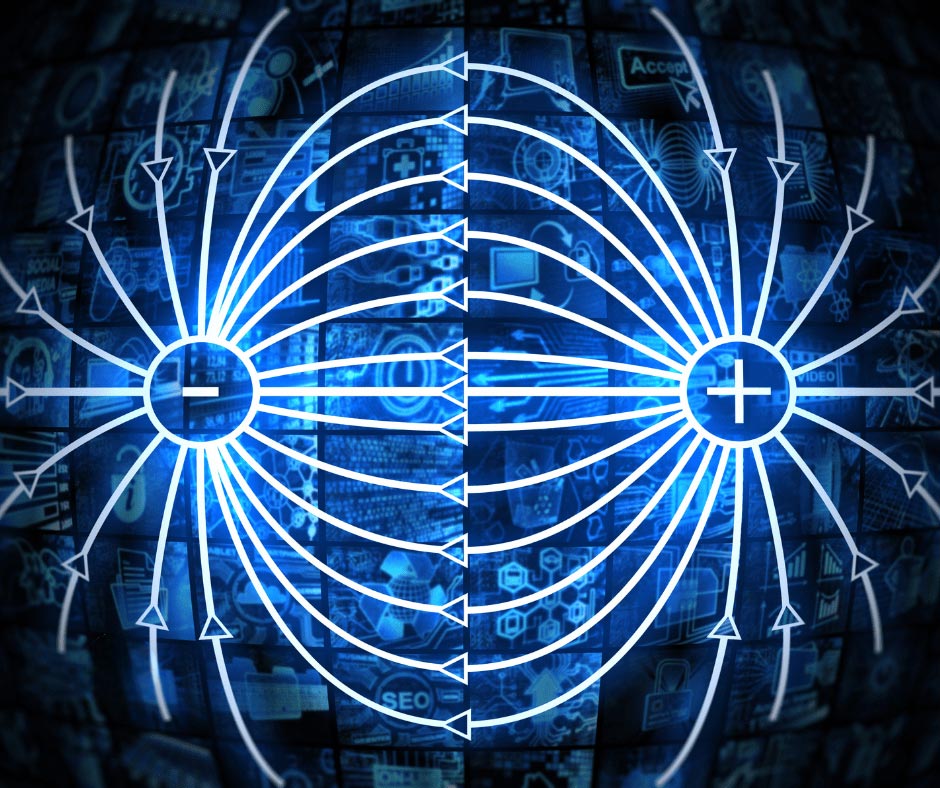
Invisible alternating magnetic fields from modern technology constantly surround us, potentially impacting our health.
Invisible alternating magnetic fields from modern technology constantly surround us, potentially impacting our health.
Among these, alternating magnetic fields stand out as a particularly concerning environmental factor that demands our attention.
At The Healthy Building Alliance, we're committed to helping you create a truly healthy home environment by addressing this often-overlooked health risk.
What Are Alternating Magnetic Fields and Why Should You Care?
Alternating magnetic fields (AMFs) are fluctuating electromagnetic fields created when alternating current (AC) flows through wires, appliances, and electrical systems. Unlike static magnetic fields (like those from permanent magnets), alternating magnetic fields change direction and strength many times per second—typically 50 or 60 times per second in household electricity.
These invisible fields penetrate most building materials and can extend several feet from their source, creating potential exposure zones throughout your home. What makes alternating magnetic fields particularly concerning is their ability to induce electrical currents within the human body, potentially disrupting natural biological processes at the cellular level.
The History of Alternating Magnetic Field Research
The journey to understanding alternating magnetic field health effects began in 1979 when epidemiologist Nancy Wertheimer first identified a potential link between childhood leukemia and proximity to power lines. Though initially ridiculed by the scientific community, her pioneering work has been validated by decades of subsequent research.
By 2001, the evidence was compelling enough that the International Agency for Research on Cancer (IARC) classified extremely low frequency (ELF) magnetic fields as "possibly carcinogenic to humans." This classification came after reviewing studies that consistently showed a doubling of childhood leukemia risk when residential exposure exceeded 0.4 microtesla (4 mG).
The Health Impact of Alternating Magnetic Field Exposure
The biological effects of alternating magnetic fields are now documented in thousands of scientific studies spanning multiple decades. The evidence suggests these fields may contribute to:
- Cancer development, particularly childhood leukemia
- Brain tumors and other malignancies
- Chronic headaches and migraines
- Sleep disorders and insomnia
- Depression and mood disturbances
- Hormone disruption, particularly melatonin suppression
- Cardiovascular irregularities
- Weakened immune function
Compelling Evidence from Key Alternating Magnetic Field Studies
The Swedish Karolinska Institute conducted one of the most comprehensive studies on alternating magnetic fields, involving 500,000 people. Their findings revealed a dose-dependent relationship between magnetic field exposure and cancer risk:
- Exposure above 1 mG doubled cancer risk
- Exposure above 2 mG tripled cancer risk
- Exposure above 3 mG quadrupled cancer risk
These findings align with the Ontario Hydro Study (1996), which examined 30,000 utility workers and found that combined exposure to magnetic and electric fields was associated with an 11.2-fold increased risk of leukemia, while magnetic field exposure alone increased leukemia risk by 1.6 times.
Alternating Magnetic Fields in Your Home Environment
Common sources of alternating magnetic fields in modern homes include:
- Power lines and transformers - High-voltage transmission lines and neighborhood transformers can create significant alternating magnetic fields that extend into nearby homes
- Electrical panels and wiring - Improper wiring, unbalanced electrical loads, and current on grounding systems all contribute to elevated alternating magnetic fields
- Appliances and electronics - Many household devices create alternating magnetic fields during operation, with some producing surprisingly strong fields
- Wireless charging systems - These convenient charging platforms operate by generating alternating magnetic fields to transfer power wirelessly
- HVAC systems - Motors in heating and cooling equipment can be significant sources of alternating magnetic fields
How Alternating Magnetic Fields Affect Pets and Wildlife
The impact of alternating magnetic fields extends beyond human health. Multiple studies have found concerning effects on animals:
- Dogs living in homes with alternating magnetic fields above 2 mG are six times more likely to develop lymphoma
- Laboratory monkeys exposed to electromagnetic radiation show altered circadian rhythms and significantly depressed levels of serotonin and dopamine
- Rats in high EMF environments learn more slowly and make more mistakes on cognitive tasks
- Bees exposed to high-tension power lines display abnormal behavior ranging from restlessness and irritability to abandoning hives or even stinging each other to death
Measuring and Mitigating Alternating Magnetic Field Exposure
The first step in addressing alternating magnetic field exposure is professional assessment. A building biologist or EMF consultant can conduct a comprehensive survey of your home to identify and measure sources of concern. At the HBA, our members' home assessments include detailed alternating magnetic field measurements using laboratory-grade equipment.
Effective Strategies to Reduce Alternating Magnetic Field Exposure
Unlike some environmental factors, alternating magnetic fields cannot be blocked by conventional shielding materials. Instead, reduction strategies focus on:
- Distance - Increasing distance from sources is the most effective strategy, as field strength diminishes rapidly with distance
- Circuit correction - Identifying and resolving wiring errors that create unnecessary magnetic fields
- Appliance selection and placement - Choosing lower-EMF appliances and positioning high-field devices away from frequently occupied areas
- Sleep sanctuary creation - Prioritizing the bedroom for magnetic field reduction, including moving beds away from hidden wiring and removing unnecessary electronics
- Smart meter evaluation - Assessing the contribution of utility meters to your home's overall alternating magnetic field profile
Creating a Low Alternating Magnetic Field Environment for Optimal Health
Building or renovating with alternating magnetic field awareness can significantly reduce your family's exposure. Key strategies include:
- Thoughtful electrical system design - Proper planning of electrical panels, wiring routes, and circuit layouts to minimize field generation
- Demand-switching technology - Installing automated systems that disconnect power to non-essential circuits when not in use
- Star-point wiring configurations - Implementing specialized wiring methods that minimize field generation
- Low-EMF appliance selection - Choosing equipment designed to minimize electromagnetic emissions
- Professional assessment throughout construction - Engaging EMF specialists during the building process to identify and address issues before walls are closed
Safe Alternating Magnetic Field Exposure Limits
While government regulations permit much higher exposures, building biology standards recommend these maximum alternating magnetic field levels for healthy living spaces:
- No concern: Below 20 nanotesla (0.2 mG)
- Slight concern: 20-100 nanotesla (0.2-1 mG)
- Severe concern: 100-500 nanotesla (1-5 mG)
- Extreme concern: Above 500 nanotesla (5 mG)
For comparison, conventional building codes in most countries permit exposures of 1,000,000 nanotesla (10,000 mG) or higher—a level that building biologists consider biologically incompatible with human health.
Conclusion: Taking Control of Alternating Magnetic Field Exposure
Creating a truly healthy home environment requires addressing alternating magnetic fields along with other environmental factors. While the scientific evidence continues to grow, prudent avoidance makes sense given the potential health impacts associated with these ubiquitous fields.
At the HBA, we're committed to helping families create living environments that support optimal health and wellness. Our members' comprehensive home assessments include detailed alternating magnetic field measurements, and they' construction services incorporate EMF-reduction strategies from the ground up.
Contact an HBA member today to learn more about alternating magnetic fields or to schedule a home assessment. You can also explore our related resources on EMF reduction strategies and healthy home design.
Related Articles:
- Understanding Electric Field Exposure in Modern Homes
- Radio Frequency Radiation: Sources and Solutions
- Creating a Sleep Sanctuary: Optimizing Your Bedroom Environment
- The Building Biology Approach to Healthy Home Design
Connect with a Healthy Building Professional on the HBA directory and transform your living space into a sanctuary of health and sustainability.