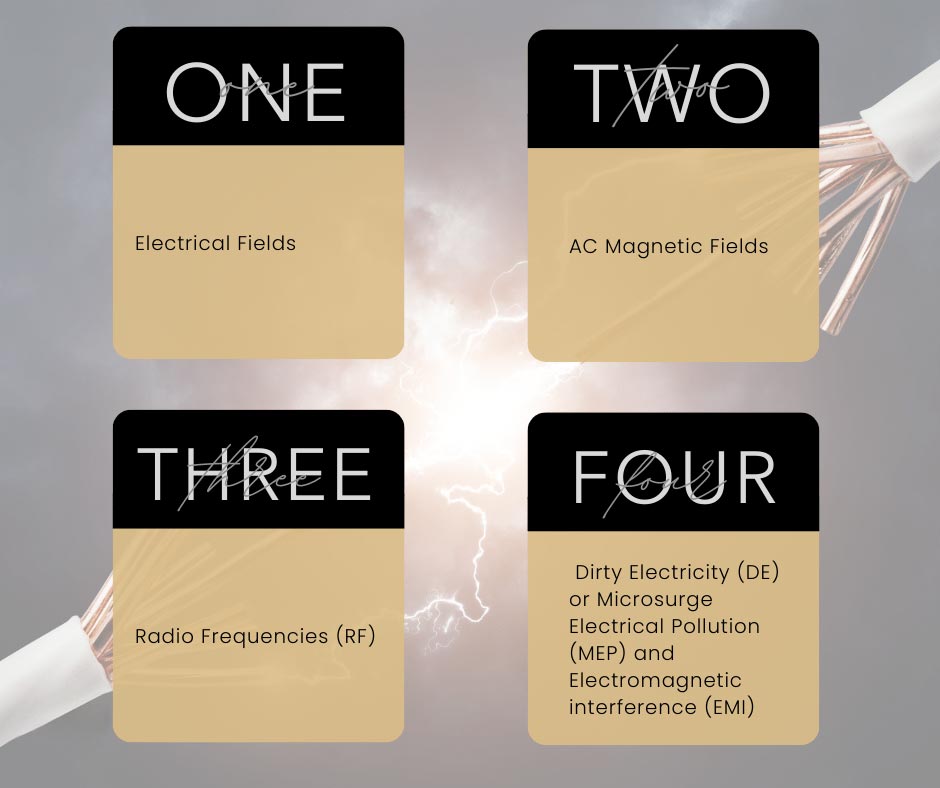
Electromagnetic fields (EMFs) exist on a spectrum and affect our bodies differently. By familiarizing yourself with the four main EMF categories, you can…
Electromagnetic fields (EMFs) exist on a spectrum and affect our bodies differently. By familiarizing yourself with the four main EMF categories, you can take informed steps to reduce exposure to dangerous EMFs and create a healthier home environment.
In today's technology-saturated world, invisible electromagnetic forces constantly surround us, potentially impacting our health and well-being in ways we're only beginning to understand.
At The Healthy Building Alliance, we believe that creating truly healthy living spaces starts with understanding these hidden influences that permeate our homes.
1. Electrical Fields: The Invisible Energy in Your Walls
Electrical fields are created by voltage – the pressure that pushes electricity through wires. These fields exist whenever electrical devices are plugged in, even if they're turned off. Electrical fields can:
- Disrupt natural sleep cycles
- Trigger stress responses in sensitive individuals
- Potentially interfere with the body's cellular communication
These fields are particularly concerning in bedrooms, where we spend approximately one-third of our lives. Standard building materials do little to block electrical fields, allowing them to permeate our living spaces unimpeded.
Measurement units: Volts per meter (V/m)
Common sources:
- Home wiring
- Lamps and appliances (even when turned off but still plugged in)
- Extension cords
- Power lines near your property
Reduction strategies:
- Install demand switches that cut power to circuits when not in use
- Use shielded cables in new construction or renovations
- Unplug devices when not in use, especially near sleeping areas
- Consider EMF-shielding paint for bedroom walls
2. AC Magnetic Fields: The Most Biologically Active EMF Type
Magnetic Fields are considered by many EMF experts to be the most biologically significant type of electromagnetic exposure.
Unlike electrical fields that can be blocked by certain materials, magnetic fields penetrate most barriers with ease, including concrete and the human body.
Measurement units: Milligauss (mG) or microTesla (μT)
Common sources:
- Power lines (especially high-voltage transmission lines)
- Transformers
- Motors in appliances (refrigerators, washers, dryers)
- Electric heating systems
- Smart meters
- Electronic devices with transformers
Health concerns:
- Disruption of cellular ion channels
- Potential interference with melatonin production
- Possible link to certain health issues with long-term exposure
- Symptoms like headaches, fatigue, and difficulty concentrating
Reduction strategies:
- Maintain distance from high-magnetic field sources
- Reconfigure living spaces to move beds and workstations away from major electrical panels
- Have your home professionally assessed for magnetic field levels
- Replace electric heating systems with non-electric alternatives
- Identify and fix wiring errors that may create magnetic fields
3. Radio Frequencies (RF): The Wireless EMF Challenge
With the proliferation of wireless technology, radio frequency radiation has become nearly ubiquitous in modern environments. RF radiation comes from:
- Cell phones and cell towers
- Wi-Fi networks
- Bluetooth devices
- Smart home devices
- Wireless baby monitors
- Cordless phones
- Microwave ovens
Measurement units: Microwatts per square meter (μW/m²) or Volts per meter (V/m)
Biological effects:
- Heat generation in tissues (thermal effects)
- Non-thermal effects on cellular function
- Potential disruption of the blood-brain barrier
- Oxidative stress at the cellular level
Reduction strategies:
- Create a low-RF sleep sanctuary by turning off wireless devices at night
- Use wired internet connections when possible
- Keep cell phones away from your body when in use
- Consider RF-shielding solutions for windows and walls
- Install a whole-home RF mitigation system
4. Dirty Electricity (DE) or Microsurge Electrical Pollution (MEP) and Electromagnetic Interference (EMI)
Dirty electricity refers to erratic spikes and surges in electrical power that travel along wiring and radiate into living spaces. This type of EMF pollution has increased dramatically with the rise of energy-efficient devices, dimmer switches, and electronics that convert AC to DC power.
Measurement units: Graham-Stetzer (GS) units
Common sources:
- LED and fluorescent lighting
- Dimmer switches
- Solar panel inverters
- Smart appliances
- Variable speed motors
- Electronic devices with switching power supplies
- Smart meters
Health concerns:
- Reported symptoms include headaches, fatigue, brain fog, and tinnitus
- Potential exacerbation of electrical hypersensitivity symptoms
- Possible contribution to inflammatory responses
Reduction strategies:
- Install whole-home filters to clean the electrical environment
- Replace dimmer switches with standard on/off switches
- Use incandescent bulbs instead of CFLs or LEDs in sensitive areas
- Address issues at the source with proper electrical engineering solutions
Creating a Low-EMF Healthy Home Environment
At the HBA, we take a comprehensive approach to EMF mitigation that balances modern convenience with health-conscious living.
Our members' thorough home assessments identify all four categories of EMF exposure and provide practical, targeted solutions for each.
A truly healthy home addresses all four EMF categories through:
- Strategic design: Placing bedrooms away from high-EMF areas
- Smarter wiring: Using shielded cables and demand switches
- Selective technology use: Implementing wired alternatives where practical
- Targeted shielding: Applying specific solutions for problem areas
Take Control of Your Home's EMF Environment
Now that you understand the four categories of EMFs, you can begin taking steps to create a healthier living environment. For most homeowners, the first step is a professional assessment to determine your current exposure levels.
Connect with a Healthy Building Professional on the HBA directory and transform your living space into a sanctuary of health and sustainability.
This article is for informational purposes only and is not intended to diagnose or treat any medical condition. If you experience symptoms you believe may be related to EMF exposure, please consult with a healthcare professional.