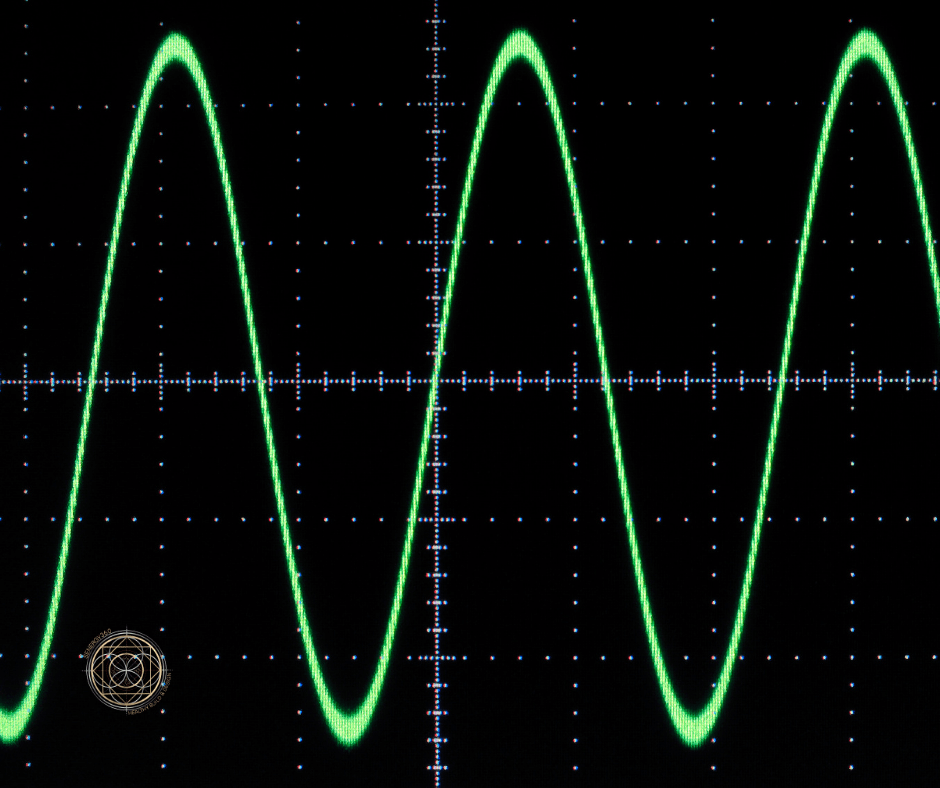
Alternating magnetic fields occur when an alternating current flows in a completed circuit, where electricity moves from the supply to the return.
What Are Alternating Current (AC) Magnetic Fields?
Alternating magnetic fields occur when an alternating current flows in a completed circuit, where electricity moves from the supply to the return.
Something has to be “turned on” to get current. Simply applying voltage to a wire does not induce a magnetic field. Visualize magnetic fields as waves or rings encircling the wire conducting the current.
Key Takeaway
Acknowledging that some AC magnetic fields are inevitable, we empower individuals with essential insights for a well-informed living environment.
The magnetic field lines are at a 90° angle to the electric field lines. The strength of the AC magnetic field depends on factors such as supply, location, current, wiring, and, most importantly, your proximity to the field's source, be it the electrical wire or appliance.
Magnetic fields can freely penetrate most materials, making containment challenging. Only specific metal alloys, such as mu-metal and soft iron, known for their high magnetic conductivity, can achieve this.
Magnetic fields also permeate human bodies unimpeded. Magnetic fields generated by two wires can enhance or diminish each other's strength, determined by the direction of the current flow in each wire. This phenomenon is akin to tossing two rocks into a pond, where the waves either cancel each other out or amplify. When the current in a wire is balanced, meaning there are no wiring errors, the resulting magnetic fields will be minimal.
What are the health concerns related to altering current magnetic fields?
Most individuals are exposed to AC magnetic fields, and recent research suggests that what was previously considered a short-term effect now raises concerns about its association with cancer and other diseases. However, controversy still surrounds these findings, especially in non-peer-reviewed studies.
Studies involving humans, animals, and in vitro research conducted since 2002 consistently categorize.
Extremely Low-Frequency (ELF) magnetic fields as a potential human carcinogen. The World Health Organization (WHO) has recommended adopting a precautionary approach regarding highly low-frequency electromagnetic fields for the first time on this issue.
This recommendation follows the findings of the Draper report (June 2005) and the recommendations in the SAGE1 Report (April 2007), signifying a crucial step in fostering sensible legislation not only in the UK and Europe but also potentially influencing developments in the United States.
The evidence fails to establish a definitive causal relationship, but it remains compelling enough to warrant concern.
While a direct link between magnetic field exposure and childhood leukemia has not been conclusively proven, the possible public health impact has been calculated assuming causality, leading to valuable insights for policy considerations.
If we assume that the association between magnetic field exposure and childhood leukemia is causal, the estimated number of cases worldwide attributable to this exposure ranges from 100 to 2400 per year.
However, this constitutes only 0.2 to 4.9% of the annual incidence of leukemia cases, approximately 49,000 worldwide in 2000. In a global context, the impact on public health, if any, would be limited and uncertain.
Several other diseases have been investigated for possible association with extremely Low-Frequency magnetic field exposure.
These include cancers in both children and adults, depression, suicide, reproductive dysfunction, developmental disorders, immunological modifications, and neurological disease.
How Do I Minimize Alternating Current Magnetic Field Exposures in My Home?
Many home appliances generate high AC magnetic fields. The closer to the electrical appliances, the greater the field exposure.
To support more restorative sleep, it is recommended to avoid or reduce the use of electrical appliances, especially in the bedroom.
When unplugging is impossible, distinguishing yourself from the same electrical appliances will also help lower AC magnetic field exposures.
There are exposures to AC magnetic fields from outside your home, such as from transformers and substations.
AC magnetic fields, which originate outside, usually cannot be economically reduced or removed as those arising from inside the house.
Focusing on those inside the home is more important. These exposures drop dramatically with distance as well. Ideally, it’s best not to purchase a home near large power lines or transformers.
The last area of concern is the house wiring itself. Although house wiring can have errors, it still functions properly.
The lights will still work if a neutral line is accidentally connected to a ground wire. Unfortunately, this imbalances the current loads on the wires and creates large AC magnetic fields. This is called a net current imbalance on a circuit.